Wedding Flowers: Ideas for Their Next Stop
After the ceremony, wedding flowers can move to the reception, go home with guests, be saved as keepsakes, or be composted if their materials allow it. Choose a plan based on the flowers’ condition, what your florist and venue have agreed to, and the time available after the ceremony.
Make a flower plan ahead of time
Decide what should happen to every arrangement during the planning stage, rather than leaving the choice until guests are heading out. A large display beside the entrance may take two people to carry, and an arrangement attached to an arch or stand might use equipment owned by the florist or venue.
Talk with both the florist and venue about which pieces can be moved, who is responsible for moving them, and the deadline for collection. A bouquet left in a warm room without water may wilt before anyone can use it elsewhere, so timing and handling matter.
- Write down which arrangements you plan to keep, relocate, give away, or compost.
- Find out which containers and structures need to be returned, and confirm which flowers you may take.
- Choose someone to take charge of each move, then settle the timing with the venue.
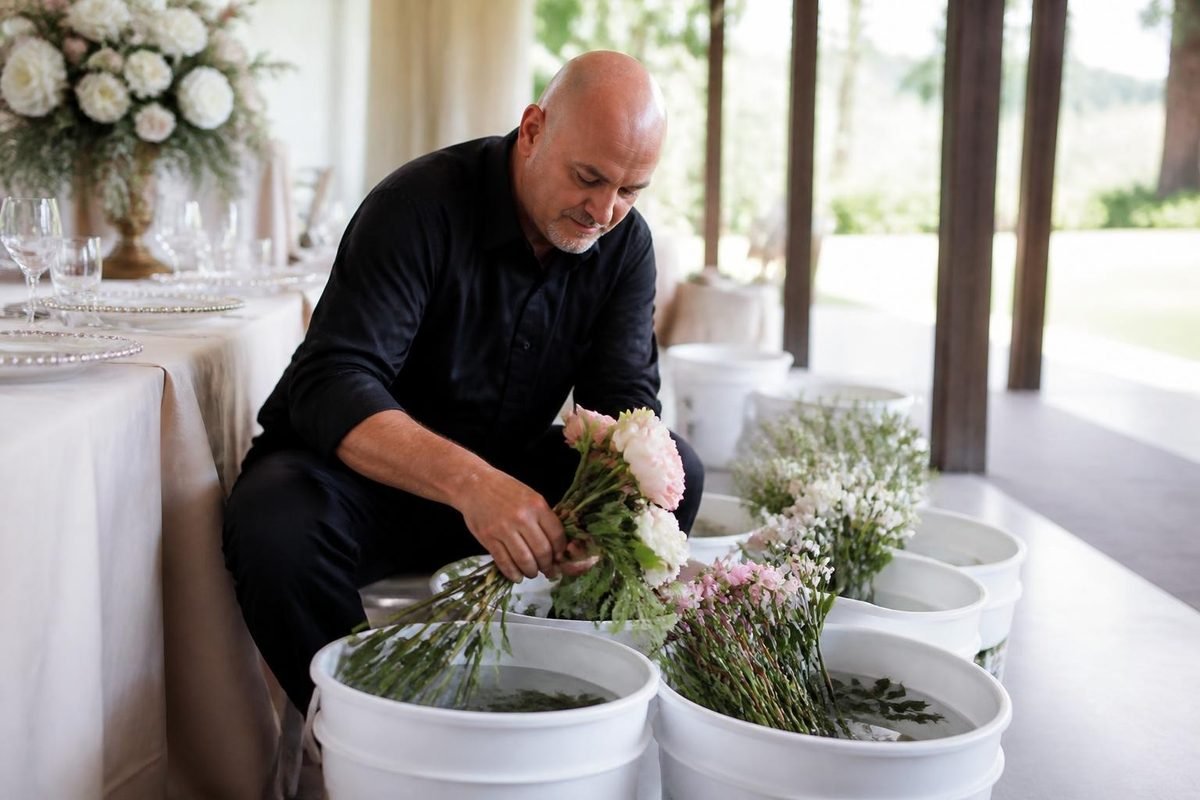
- Prepare buckets, water, and an easy-to-find collection spot if they will be needed.
- Share the instructions with everyone involved before the wedding day.
Give the arrangements another place at the reception
Flowers from the ceremony entrance can greet people again at the reception. A smaller arrangement might sit by the bar, beside the gift table, or near the seating chart. Reusing the displays gives them another role and may mean you do not need a separate set for those spots.
Pick each new location in advance and make sure the arrangement will fit there. Keep walkways open, and avoid surfaces that could be harmed by spilled water or falling petals. If flowers are fixed to an arch or another structure, check with the florist before trying to take them down.
Let guests or local groups take flowers
Family, members of the wedding party, and guests may enjoy carrying flowers home. Set out clean containers if the vases must go back to the venue or florist, and let people know when they can pick up the stems. A clear collection time helps avoid a cluster of people waiting while other tasks are underway.
A care home, community group, or another local organization may also accept a floral donation. Ask ahead of time instead of arriving with arrangements without warning. The organization may have delivery procedures or limits related to fragrance and the condition of the flowers.
Keep a few stems as a memory
Choose the flowers that mean the most to you and arrange preservation soon after the event. Drying and pressing can alter a flower’s color or shape, so speak with a preservation specialist first about how the finished keepsake may look.
If you would rather keep a visual record, photograph the arrangements before anyone dismantles them. A close shot shows the flowers’ details, while a wider picture records how they looked in the ceremony space.
Dispose of the remaining flowers with care
Some plant material can go into compost, but first remove ribbon, wire, tape, and anything else that is not plant matter. Local composting rules differ, so check what is accepted where you live. Do not put floral foam in a compost pile.
Whichever option you choose, give one person clear instructions for the flowers and their containers. A simple plan means the arrangements can be reused, shared, remembered, or composted without leaving you to sort everything out as the celebration ends.
Read next: causes of wilting flowers